What is ADHD? A Comprehensive Guide
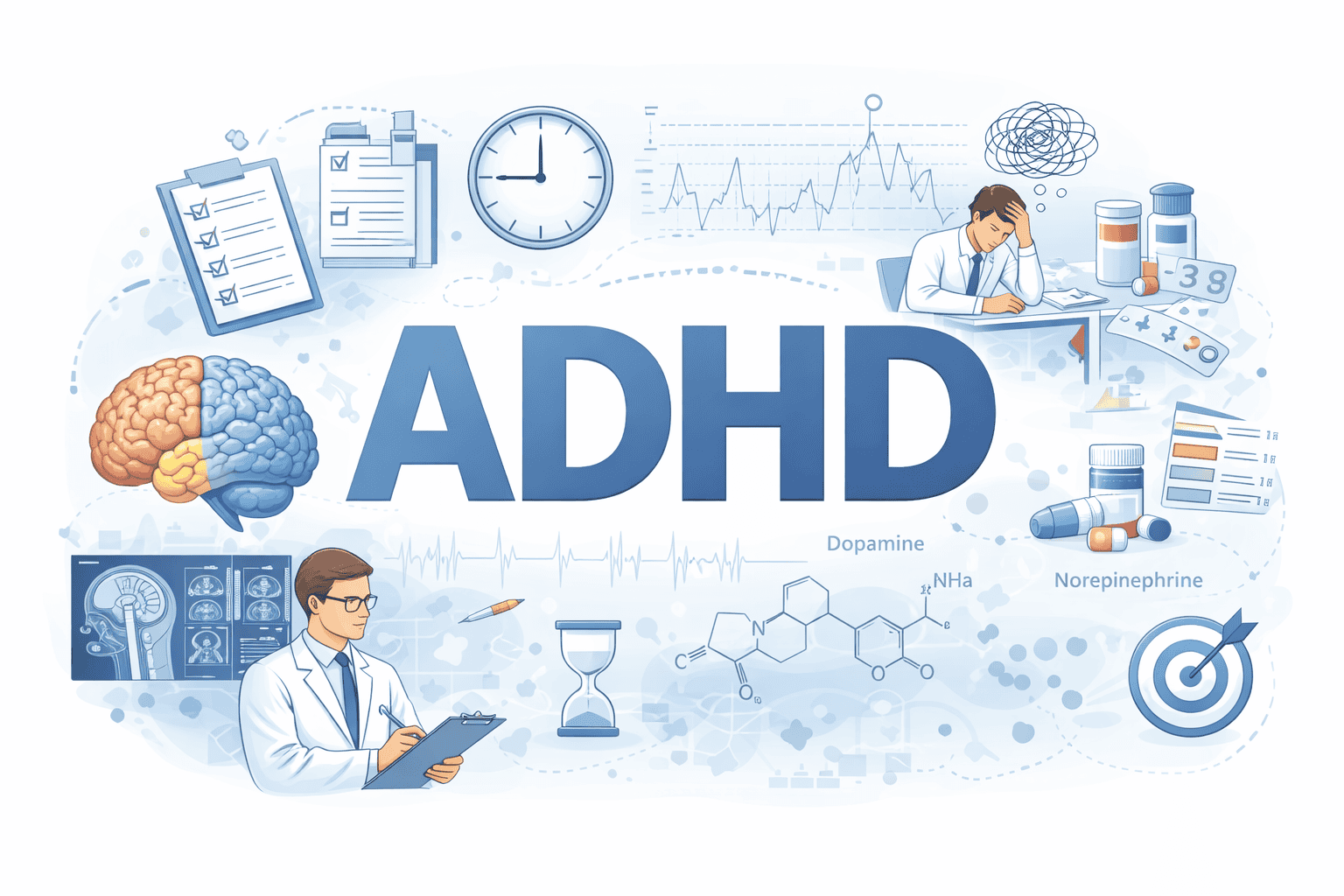
What is ADHD? ADHD Symptoms, Diagnosis, and Treatment in Rockwall
Attention-Deficit/Hyperactivity Disorder (ADHD) is a common and highly treatable neurodevelopmental condition that affects both children and adults. At Hillis Counseling, PLLC, we provide ADHD counseling and assessment services in Rockwall, Texas and surrounding communities.
This guide explains ADHD symptoms, causes, diagnosis, and treatment options — so you can better understand what’s happening and what help is available.
What Is ADHD?
Attention-Deficit/Hyperactivity Disorder (ADHD) is a neurodevelopmental disorder characterized by persistent patterns of:
- Inattention
- Hyperactivity
- Impulsivity
According to the American Psychiatric Association, symptoms must interfere with daily functioning and be present in multiple settings (home, school, or work) to meet diagnostic criteria (APA, 2022).
ADHD is not laziness.
It is not poor parenting.
It is not a lack of intelligence.
It is a brain-based difference in executive functioning and self-regulation.
Types of ADHD
The DSM-5-TR identifies three presentations of ADHD:
1. Predominantly Inattentive Presentation
Often includes:
- Difficulty sustaining attention
- Disorganization
- Forgetfulness
- Losing important items
- Avoiding tasks requiring sustained effort
This type is frequently underdiagnosed, especially in girls and adults.
2. Predominantly Hyperactive-Impulsive Presentation
Often includes:
- Restlessness
- Fidgeting
- Excessive talking
- Interrupting others
- Acting without thinking
3. Combined Presentation
A mix of inattentive and hyperactive-impulsive symptoms.
ADHD in Children vs. Adults
Many people think ADHD is only diagnosed in children. However, symptoms often continue into adulthood.
The Centers for Disease Control and Prevention reports that millions of children in the United States have been diagnosed with ADHD, and many continue to experience symptoms later in life.
ADHD in Children May Look Like:
- Classroom distraction
- Academic underachievement
- Behavioral concerns
- Trouble following directions
ADHD in Adults May Look Like:
- Chronic procrastination
- Time management struggles
- Job instability
- Emotional dysregulation
- Relationship strain
Many adults in Rockwall and surrounding areas seek ADHD counseling after years of wondering why things feel harder for them than for others.
What Causes ADHD?
ADHD has strong biological and genetic roots.
Research supported by the National Institute of Mental Health shows differences in brain networks responsible for attention, impulse control, and executive functioning.
Contributing factors may include:
- Genetics (family history)
- Brain structure and function differences
- Neurotransmitter regulation (dopamine and norepinephrine)
- Early developmental factors
ADHD is not caused by screen time, sugar, or poor discipline alone.
Executive Functioning and ADHD
ADHD is best understood as a difficulty with executive functioning — the brain’s management system.
Executive functions include:
- Planning and prioritizing
- Organization
- Working memory
- Emotional regulation
- Task initiation
- Time management
Many individuals with ADHD report:
“I know what I need to do — I just can’t seem to start or stay consistent.”
This gap often leads to anxiety, stress, shame, or low self-esteem — which is where counseling can help.
How Is ADHD Diagnosed?
ADHD diagnosis involves a comprehensive clinical evaluation, which may include:
- Clinical interviews
- Behavioral history
- Symptom rating scales
- Functional impairment assessment
- Rule-out of other conditions
There is no single medical test for ADHD. Diagnosis is based on established clinical criteria.
If you are looking for ADHD evaluation or counseling in Rockwall, TX, a structured assessment process can help clarify whether ADHD is present and what next steps make sense.
ADHD Treatment Options in Rockwall, Texas
ADHD is highly treatable. Effective treatment may include:
1. ADHD Counseling (Cognitive Behavioral Therapy)
Therapy helps individuals:
- Build structure and routines
- Improve time management
- Develop organization systems
- Reduce negative self-talk
- Strengthen emotional regulation
2. Medication Management
Some individuals benefit from stimulant or non-stimulant medication prescribed by a medical provider.
3. Parent Support and Coaching
For children and adolescents, parent involvement is critical to success.
4. Skills Training & Executive Function Coaching
Learning practical systems often improves functioning more than motivation alone.
At Hillis Counseling, we tailor ADHD treatment plans based on age, symptoms, and personal goals.
Common Co-Occurring Conditions
ADHD often overlaps with:
- Anxiety
- Depression
- Trauma-related symptoms
- Learning disorders
- Sleep difficulties
Accurate assessment helps determine whether ADHD is primary or part of a broader clinical picture.
When Should You Seek ADHD Counseling?
Consider professional support if you or your child experiences:
- Ongoing academic or workplace struggles
- Difficulty completing tasks
- Chronic disorganization
- Impulsive decision-making
- Emotional outbursts
- Repeated relationship conflict related to focus or follow-through
Early intervention improves long-term outcomes.
ADHD Counseling in Rockwall, TX
At Hillis Counseling, PLLC, we provide:
- ADHD therapy for children, teens, and adults
- Executive functioning support
- Behavioral strategies
- Anxiety and ADHD treatment
- Parent consultation
If you are in Rockwall, Heath, Royse City, Fate, Rowlett, or surrounding areas, professional support is available.
Schedule an ADHD Consultation to explore your options for ADHD counseling in Rockwall.
If you’re wondering whether ADHD may be affecting you or your child, we can help clarify next steps.
📍 Located in downtown Rockwall, Texas
📞 Contact Hillis Counseling to schedule a consultation and talk to an ADHD therapist in Rockwall.
🌐 Visit: https://hilliscounseling.com
References
American Psychiatric Association. (2022). Diagnostic and Statistical Manual of Mental Disorders (5th ed., text rev.; DSM-5-TR).
Centers for Disease Control and Prevention. (2023). ADHD Data and Statistics. Retrieved from https://www.cdc.gov/adhd
National Institute of Mental Health. (2023). Attention-Deficit/Hyperactivity Disorder. Retrieved from https://www.nimh.nih.gov

